
Rich vs Poor Planning: California to Florida Estate Planning insights
Rich Planning and Poor Planning lead to very different families. I saw it firsthand. With Poor Planning, my family suffered a terrible probate when my grandfather passed away. It destroyed my family. My dad, uncle, and grandma litigated each other to death in probate court. My grandfather’s legacy was shattered. There was no peace. Our family was left in pieces.
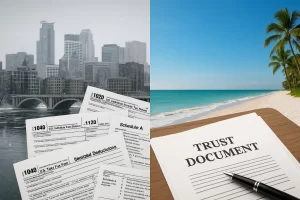
After that, my mother married into a family who had great estate planning. I experienced Rich Planning. In my new family, our patriarch relocated from a high-tax, trust-unfriendly state to Florida. He established a dynasty trust, effectively preserving the family’s wealth for multiple generations.
I became a lawyer to promote Rich Planning and fix problems caused by Poor Planning. I help families experiencing the results of Poor Planning by litigating in probate court. I help affluent families implement Rich Planning to protect and grow their legacies.
Why California Makes California to Florida Estate Planning Necessary
I’ve practiced long enough to see why California is considered one of the least favorable states for preserving an estate. California’s tax laws are brutal on high-net-worth individuals. While California surprisingly does not currently impose a separate state estate tax (sometimes called a “death tax”), it makes up for it with other heavy taxes:
- Sky-High Income Tax: California has the highest state income tax in the country with a top bracket of 13.3%. (Technically the base rate caps at 12.3%, but an added 1% “millionaire tax” kicks in on income over $1 million, hitting successful individuals hard.) This means more than 13 cents of every dollar earned over that threshold goes to the state.
- Capital Gains Tax: California taxes capital gains as ordinary income. If you sell a business, stock portfolio, or real estate for a large profit, you’ll pay up to that same 13.3% on the gain. In contrast, federal capital gains tax tops out at 20% (plus a 3.8% Medicare surtax). A high-earning Californian can easily lose one-third of an investment gain to taxes when combining state and federal rates.
- Proposed Estate Taxes: Even though California doesn’t have a state estate tax today, there have been attempts to introduce one. In 2019, lawmakers proposed SB 378 to tax estates over about $3.5 million at rates up to 40%, mirroring the federal estate tax. (This would have required a voter-approved amendment, and it did not pass.) The mere fact this was considered shows California’s appetite for taxation.
- “Inheritance” through Property Tax: California’s Proposition 19 (passed in 2020) limited the ability to keep low property tax bases when real estate passes to children, effectively increasing property taxes for many families inheriting homes. While not a direct inheritance tax, it’s been dubbed a “sneaky estate tax” on the next generation by forcing reassessment at market value in some cases.
Other high-tax states pile on even more direct death taxes. For instance, New York imposes a state estate tax up to 16% on estates above roughly $6–7 million. Worse, New York has a notorious “cliff”: if your estate exceeds 105% of the exemption (only slightly above the cutoff), the entire estate becomes taxable, not just the overage. This can be a heartbreaking trap – an estate just a dollar over the limit loses the entire exemption and gets taxed on the full value. Some families accidentally trip this cliff and face a massive tax bill on what they thought would be protected.
States like New Jersey and Maryland even levy inheritance taxes on certain heirs. New Jersey, for example, charges 11%–16% on inheritances going to siblings, nieces, and others outside the immediate line, with only a small $25,000 exemption. Maryland manages to have both an estate tax (up to 16%) and an inheritance tax (10%) simultaneously. Can you imagine? Maryland taxes your estate when you die and taxes your heirs for receiving what’s left.
For wealthy families, these taxes are not just numbers on paper – they cause real pain. I’ve seen devastating examples. One client’s family in the Northeast had to sell a beloved vacation home and liquidate a portion of a family business simply to pay the state estate tax after their patriarch’s passing. The look on the Daughter’s face when she realized her father’s lifetime of hard work would be sliced by millions of dollars, and that they’d lose the home where they made so many memories, was truly heartbreaking. These “death taxes” often rob families of not only money but also of keepsakes and opportunities. Money that could have funded grandchildren’s educations, endowed family charities, or simply provided financial security is instead siphoned away by the state.
In short, California and its high-tax peers make it exceedingly difficult to preserve generational wealth. Every dollar taxed away is a dollar not reinvested in the family. High income taxes mean it’s harder to grow your estate during life, and estate/inheritance taxes in many states mean your legacy can be gutted at death. No wonder we call these “tax-heavy states” – they place a heavy burden on their residents’ prosperity.
Why Families Choose California to Florida Estate Planning over Staying
Given the punishing tax environment above, it’s no surprise that people are fleeing high-tax states in droves, with California being a prime example. In recent years, Florida has seen a huge influx of wealth from states like California, New York, New Jersey, and Illinois. Let me share some eye-opening numbers and stories:
- Population Shift: Florida experienced the 2nd-highest population growth in 2023, gaining over 365,000 new residents that year. Meanwhile, California lost about 75,000 residents and fell below 39 million for the first time since 2015. Many of those leaving California (and other “blue” high-tax states) are high-earning, well-educated individuals – precisely the people most sensitive to tax issues.
- Wealth Migration: Florida isn’t just gaining people; it’s gaining wealth. Amazon founder Jeff Bezos made headlines by moving from Seattle to Miami and then selling a chunk of Amazon stock – by doing so as a Florida resident, he saved millions in state taxes he would have owed in Washington (another high-tax state). Florida’s appeal to retirees is also strong – retirees moving from Northern states keep more of their pension and investment income since Florida won’t tax it.
- Grant Cardone’s Move: Real estate mogul Grant Cardone publicly said, “I used to live in California, moved to Miami for one reason — 13.3%”. He was of course referring to California’s top income tax rate. Cardone accuses states like California, New York, and New Jersey of “gouging you with taxes”. In fact, Cardone moved in 2012 right after California hiked its income tax from 10% to 13.3%, and he claims California “lost $1 billion in revenue” because he left. While that figure is his bold estimation (likely including future years of taxes, jobs he took with him, etc.), it underscores how much a single ultra-wealthy individual leaving can cost a state.
- Other High-Profile Exits: California’s steep taxes (and perhaps other policies) have prompted celebrities and business figures to depart. Sylvester Stallone recently decided to move to Florida, joining what the media calls a flock of rich and famous trading the West Coast for the Sunshine State. Even Governor Ron DeSantis’s office quipped that Florida is the “Free State of Florida” welcoming those tired of the burdens elsewhere. From financiers like Paul Tudor Jones and David Tepper leaving the Northeast, to tech investors and companies relocating, the pattern is clear.
So, why are they leaving? The reasons tend to boil down to taxes and quality of life:
- State Income Tax Savings: If you’re a high earner, moving to Florida is like getting a massive raise. A Miami tax advisor noted her clients leaving places like New York or California save on average around 13% on their total tax bill by relocating. That roughly equals the top income tax rates they escape. In one example, a doctor moving from California to Florida saved about $28,340 a year in taxes, and another moving from Connecticut saved about $28,000. For even higher earners: a couple earning $650,000 could save about $70,000 every year by switching from New York to Florida. That’s $70k every year – money that can be invested, spent, or donated instead of taxed.
- Estate and Inheritance Taxes: For the ultra-rich, this is arguably an even bigger motivator than annual income tax. As one tax attorney put it, “The real goal for the wealthy who move out of New York is to escape its estate tax.” New York’s estate tax is 16% on estates above roughly $6 million. For a New Yorker worth $100 million, dying a New York resident could mean a $16 million state tax bill. By becoming a Florida resident, they can avoid that entirely. Even if New York audits them and makes them pay a year or two of income taxes in dispute, it’s worth it to save $16 million for their heirs. That speaks volumes. Similarly, California has no estate tax now – but there’s always a risk the laws change or a future estate tax is enacted. By moving to Florida, wealthy individuals add a layer of protection against any new state death tax. (Not to mention avoiding inheritance-style taxes in states like NJ/PA if those applied.)
- Quality of Life & Business Climate: Taxes aside, Florida offers warm weather, a pro-business environment, and a lifestyle that many prefer. In Miami, I’ve seen first-hand how the city rolls out the red carpet for newcomers. Grant Cardone even mentioned that when he arrived, the Florida governor at the time called him in the first week to welcome him! Local business owners reached out, and he was able to scale from 5 employees to 500 in Florida. That kind of welcome doesn’t happen in Los Angeles. Many clients also cite reasons like safer communities, less regulatory red tape, and yes, not having to ask a security guard to unlock the toothpaste at CVS (a tongue-in-cheek reference to California’s urban crime issues).
In summary, affluent families are voting with their feet. They’re seeking states that don’t punish success. Florida, with no income or estate tax, is a natural magnet. As an attorney, I often hear clients say they feel relieved once they make the move – like a weight of uncertainty is lifted. They know that going forward, more of what they earn, grow, and pass on will stay in their family’s hands. And ultimately, that’s what estate planning is about: keeping your legacy intact for those you love.
Florida: Estate Planning Destination After Leaving California

Florida has a well-earned reputation as a tax haven for the wealthy – and for good reason. The state’s laws are extremely friendly to those looking to preserve wealth across generations. Here’s what makes Florida so special for estate planning:
- No State Income Tax: Florida is one of the few states with no personal income tax or capital gains tax at all. This is enshrined in Florida’s Constitution. Practically, this means if you’re a Florida resident, the state takes $0 of your salary, bonus, stock dividends, or business income. Whether you make $50,000 or $50 million, Florida won’t tax your earnings. This is a night-and-day difference from California’s 13.3% or New York’s ~12.7% combined state/city tax.
- No Estate Tax, No Inheritance Tax: Florida imposes no estate tax or inheritance tax on its residents. When you die as a Florida resident, your estate pays only the federal estate tax (if applicable, for 2025 the federal exemption is extremely high – $12.92 million per person, set to drop to around $6 million in 2026 unless laws change). But Florida will not take a second cut. This is “great news for those looking to preserve wealth and pass on assets to heirs with minimal tax burdens,” as one estate planning firm aptly put it. By contrast, as we discussed, a state like New York or Illinois could siphon off another 10-16% of the estate, and states like Kentucky or New Jersey could tax certain heirs 15%+ on what they inherit. In Florida? None of that. Heirs receive their inheritances free of state-level taxes. This alone can save families millions of dollars and is a driving reason many wealthy patriarchs and matriarchs become Floridians.
- Asset Protection & Homestead: Florida provides powerful legal tools to protect assets from creditors and preserve them for your family. The most famous is the Florida homestead exemption. Your primary residence in Florida is essentially untouchable by most creditors – no matter its value. O.J. Simpson famously took advantage of this, buying a mansion in Florida so that it couldn’t be seized by civil judgment creditors. For estate planning, this means your family home can be safeguarded as a legacy asset for your spouse or children, rather than lost to a lawsuit or debt. Florida’s homestead also comes with property tax advantages (caps on annual valuation increases) and restrictions that ensure a spouse or minor child can’t be disinherited from the home without consent. It’s a double-edged sword (you must be careful how you devise your home), but overall it’s a huge benefit to families. In my practice, I often help newcomers navigate these homestead rules so they can maximize protection without inadvertently running afoul of spousal rights.
- Trust-Friendly Laws (Dynasty Trusts): Florida has become one of the best jurisdictions for trusts. We allow “dynasty trusts” that can last for generations. In 2022, Florida extended the allowable duration of a private trust from an already lengthy 360 years to a staggering 1,000 years. (Yes, one thousand!). In effect, that’s nearly perpetual. This means you can set up a trust today that could potentially benefit your great-great-great-grandchildren without ever being broken by old rule-against-perpetuities laws. The longer a trust can last, the longer your wealth can grow and provide for your bloodline under the terms you set. Additionally, Florida law has been modernized to provide excellent creditor protection for irrevocable trusts, favorable treatment of Spousal Lifetime Access Trusts (SLATs), and other sophisticated tools. The state wants you to bring your capital here and even keep it here for centuries.
- Corporate and Business Climate: Florida’s overall tax burden on businesses is low too (no personal income tax and a moderate corporate tax). There’s no state-level estate tax on a family business when an owner dies (which can cripple businesses in states that do tax estates). This means family businesses can more easily continue operating into the next generation. I’ve helped clients re-incorporate or domicile their family companies in Florida to take advantage of this stability. And beyond taxes, Florida’s regulatory environment is generally pro-business, and the lifestyle (weather, amenities) helps in attracting talent to your enterprise.
In a nutshell, Florida lets you keep more of what’s yours – during life and after death. It’s not a stretch to say that Florida is a paradise for estate planning. The state’s message to wealthy families is essentially: “Come here, invest here, retire here, die here – we won’t punish you for it.” Contrast that with the attitude of high-tax states that seem to say, “If you die here, we’ll take a big bite out of your legacy for ourselves.”
From my experience, this favorable environment changes clients’ outlook. Instead of scrambling for ways to minimize state taxes or worrying about forced asset sales to pay a tax bill, families can focus on more meaningful planning – like charitable giving, truly taking care of the next generation, and enjoying their wealth. Florida lets me, as an attorney, employ “Rich Planning” strategies to the fullest, because I’m not fighting an uphill battle against hostile state laws. It’s incredibly rewarding to see my clients breathe easy knowing Florida is on their side, not against them.
How to Establish Florida Domicile for California to Florida Estate Planning
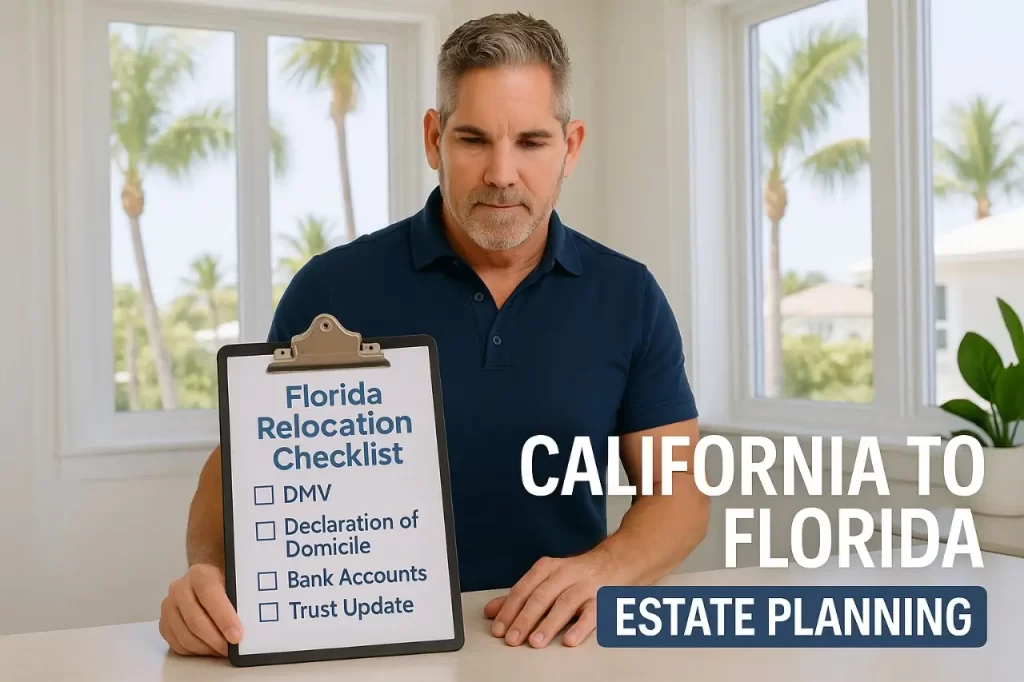
At this point, you might be wondering: “Alright, Florida sounds great. But how do I actually become a Florida resident for legal and tax purposes?” The good news is that establishing a Florida domicile is straightforward – and our firm guides clients through it all the time. Domicile is just a fancy word for your permanent home, the state you intend to reside in indefinitely. Here’s how you secure it:
1. Cut Ties with Your Old State: This is step one. You need to clearly sever the connections that made you a resident of California (or whatever state you’re fleeing). That means if you still own a home there, consider selling it or renting it out long-term. Close your California business entities or relocate them. Move your primary bank accounts to Florida-based banks. In short, show that your life is being transplanted to the Sunshine State. High-tax states like California or New York have been known to audit people who say they’ve left. They’ll look for any excuse to claim you never truly moved. (New York is notorious – their auditors will pour through credit card records, cell phone logs, even check your social media or interview your doorman to see if you really changed your life, not just your mailing address!) One New York auditor inspected a taxpayer’s refrigerator to see if it was fully emptied – in that case it was, and that helped prove the move was real. They’ve even checked where the family dog lives, reasoning that your pets stay where home truly is. So don’t give the old state ammo – make a clean break.
2. Physical Presence – 183-Day Rule: Most states use some form of the “183 days” test. Spend at least half the year + 1 day (so 183 days) in Florida. It’s not enough to have a condo in Miami that you visit occasionally – you need to actually live in Florida most of the year. Keep a log or use a phone app to track days if needed; if California ever disputes your residency, you might need to prove you weren’t there for, say, 7 months of the year. Practically, many clients sell their California home and move their family full-time to Florida. If you still split time, be very mindful of counting days in the old state.
3. Get a Florida Driver’s License and Voter Registration: These are two strong indicators of domicile. Go to the Florida DMV and swap your old license for a Florida driver’s license (you’re required to do so within 30 days of moving, by the way). Register to vote in Florida and stop voting in your old state. These government IDs and records will firmly say “Florida resident” and are often the first thing auditors check.
4. File a Declaration of Domicile: Florida has a simple process to officially declare your new residency. Under Florida Statutes § 222.17, you can file a Declaration of Domicile with the Clerk of Court, which is basically an affidavit stating “I am a bona fide resident of Florida and this is my permanent home”. It’s a short form – I actually walk clients through filling it out. You list your former address (e.g., in California) and your new Florida address. It gets notarized and recorded in county records. This document is powerful evidence of your intent. It literally says you intend to reside in Florida permanently and maintain it as your home. It’s not strictly required by law to establish domicile, but I highly recommend it. It’s inexpensive (just a small recording fee) and provides a paper trail of your new status.
5. Move Your Key Relationships to Florida: Think about the “center of your life” – and shift it to Florida. Find new Florida doctors and dentists (don’t keep flying back to L.A. for checkups, as New York auditors have pointed out – people don’t typically travel out of state just to see a dentist). Move your favorite possessions to your Florida home – your family photo albums, valuable art, etc., should not stay back in a California storage unit. Perhaps join a local Florida church or synagogue, and enroll your kids in Florida schools. If you have a business, start holding your board meetings or annual meetings in Florida. All these moves send a clear signal: Florida is now home.
6. Update Legal Documents: Update your estate planning documents to recite that you are a Florida resident. I draft new Florida wills and trusts for clients who come from out of state, not only to optimize for Florida law but to include statements like “I am domiciled in Miami-Dade County, Florida.” Update your mailing address with all financial institutions and the IRS. File final part-year resident tax returns for your old state, and going forward file as a Florida resident (Florida has no income tax return, so that simplifies things!).
The bottom line is, Florida wants to make you a resident – it’s the other states that make it hard to leave. That’s why I’m here to help. Our firm provides full-service guidance in domicile transfers. We don’t just draft legal forms; we actually project manage your relocation in a sense. We provide checklists, handle the Declaration of Domicile filing, connect you with Florida insurance agents (to update policies), and even coordinate with your CPA to ensure your tax filings align with the move. If California (or another state) audits your change of residency, we stand by you to defend it. We gather the proof and make the case that you lawfully changed your domicile. This is a service we’re proud to offer, because it sets the foundation for all the other “Rich Planning” strategies in Florida to work. Once you’re officially a Floridian, you can fully reap the no-tax rewards.
Let me emphasize: obtaining Florida domicile is relatively easy, but it must be done properly. With experienced guidance, it can be a smooth process – frankly, I aim to make it fun for clients, like a rite of passage into a better life. After all, you’re not just filling out forms; you’re taking concrete steps to protect your family’s future. And I get to tell my clients: “Welcome to Florida – your money is safer here!”
Grant Cardone’s California to Florida Estate Planning Case Study
To drive these points home, let’s look at a real-world case study. Grant Cardone – perhaps you’ve heard of him – is a high-profile entrepreneur and real estate investor. His story perfectly illustrates the benefit of leaving a tax-heavy state (California) for Florida. While not everyone has Cardone’s level of wealth, the lessons apply broadly to wealthy families considering the move.
Grant Cardone’s Asset Snapshot After Relocation
Grant Cardone lived in Los Angeles, California for over 25 years before relocating. By around 2011–2012, he had built up a significant portfolio of businesses and investments:
- Operating Companies: He was running three businesses out of Los Angeles, including sales training and consulting ventures (Cardone Training Technologies) and was starting what would become Cardone Capital (real estate investment firm).
- Real Estate Holdings: Cardone owned a personal residence in Los Angeles and additional investment properties between San Diego and LA. (In La Jolla, he owned a home on the cliffs overlooking the Pacific – prime real estate.) These properties were worth many millions of dollars.
- Personal Assets: Like many successful Californians, he had the trappings of success – multiple cars (which he sold off when leaving), likely luxury furnishings, etc. While not public, we can imagine a collection of sports cars and a boat or two.
- Investments and Cash: Cardone was (and is) a prolific investor. By 2012, he had substantial financial assets. Today his net worth is estimated around $600 million, and even back then it was already large. He raised capital and invested in apartment complexes; Cardone Capital now reports over $4 billion in assets under management – a figure that was growing even in 2012.
- Intangibles: As a bestselling author and influencer, Cardone’s brand and future earning potential were arguably his biggest asset. He was releasing The 10X Rule book in 2011, which catapulted his fame. In a sense, California stood to gain a lot in future taxes as his star rose.
In late 2012, when California’s governor approved raising the top income tax rate to 13.3%, Cardone made good on his promise: he sold his house, sold his cars, and uprooted his entire life. Without even knowing exactly where he’d end up, he was that determined to escape. He and his wife Elena ultimately chose Miami, Florida, drawn by the business-friendly vibe and beautiful lifestyle.
It’s important to note: Cardone’s entire asset base effectively moved with him. By becoming a Florida resident:
- The income from his businesses (which grew tremendously post-move) would not be subject to California tax.
- His future real estate acquisitions and sales would avoid California’s high tax on capital gains.
- Any appreciation in his portfolio from that point on would be enjoyed in a no-income-tax environment.
- His estate, should something happen to him, would no longer face a potential California estate tax (if one were implemented later) or any risk of inheritance tax.
At the time of his move, Cardone publicly warned California leaders that chasing away productive people was a mistake. He estimated that between his personal taxes, the jobs he created, and his economic activity, California was forfeiting hundreds of millions of dollars over his lifetime. Indeed, Cardone’s expansion in Florida has been massive – he went from a handful of employees in CA to over 500 employees in Florida. Those are jobs (and all their associated spending) that California lost out on.
Tax Savings from California to Florida Estate Planning
Let’s quantify how much money Grant Cardone likely saved by moving to Florida – it’s jaw-dropping. While we don’t have his exact income figures, we can make some educated estimates:
- Annual Income Tax Savings: Cardone’s enterprises and investments generate hefty income. Suppose in a given year he earns $10 million taxable income (this is plausible given his businesses, though some years could be more). In California, that would incur 13.3% state tax on most of it – roughly $1.33 million per year to the state. In Florida: $0. Over a decade, that alone is over $13 million saved (and likely much more, as his income grew).
- Capital Gains and Business Sale Savings: Cardone does big real estate deals. If he sells an apartment complex for a $20 million profit, California would want 13.3% of that gain – that’s $2.66 million in tax. In Florida, he saves that completely. He’s done numerous deals like this. Cumulatively, by doing them as a Floridian, he’s probably saved tens of millions that otherwise would have gone to Sacramento.
- Estate Tax Avoidance: Now, California had no estate tax in 2012. But imagine if Cardone had stayed and California eventually imposed one (not far-fetched given proposals). With a $600 million (and rising) net worth, a California estate tax of, say, 15% would cost $90 million at his death – money out of his family’s pocket. By being a Florida domiciliary, he essentially insures against that scenario. Florida will impose zero state estate tax. His estate plan can also take advantage of Florida tools (like dynasty trusts) to potentially reduce even federal estate taxes. The peace of mind from knowing his heirs won’t face a state death tax is huge. Even if California never adds an estate tax, there’s still an implicit saving: New York’s example of 16% on large estates suggests what could have been. For a man of his wealth, avoiding any chance of, say, a $90 million hit is reason enough.
- Lifestyle and Business Growth Value: It’s harder to quantify, but by moving to low-tax Florida, Cardone was able to scale his operations aggressively. He mentioned that Florida officials welcomed him and resources were abundant. His 10X Growth Conferences in Miami drew tens of thousands of attendees. All this growth might have been slower (or taxed more) in California. Florida’s environment may well have helped him become even wealthier, faster. The compounding effect is incredible – every dollar not taxed can be reinvested, potentially earning more. Over a decade, avoiding that 13.3% state skim means far more capital to compound in Cardone’s real estate funds.
In interviews, Cardone has joked that California essentially paid for his Miami penthouse via the tax savings. It’s not really a joke; it’s true. If you save over $1 million a year in taxes, in a few years you’ve saved enough to buy a mansion in Florida. Another way to look at it: Suppose Cardone’s move meant he kept an extra 13% of his income each year. That’s like giving himself a 13% raise with no extra work, just by changing residency.
For many of my clients, I perform a similar “tax savings analysis.” The numbers are often astounding. For example, one family from New Jersey saved about $60,000 per year just in state income tax by relocating their consulting business to Florida. Another client from New York saved about $70,000 per year on a smaller income – enough to pay for his second home in the Keys. And if their estates are large, the one-time estate tax savings can be in the millions (e.g., avoiding 16% of a $20M estate saves $3.2M that stays with the family).
Lesson Learned: Grant Cardone’s case teaches us that decisive action pays off. By taking bold steps – selling assets, moving his family, formally changing domicile – he reaped enormous financial rewards. Importantly, he didn’t wait around. He anticipated that California’s taxes were only going higher and acted before they could do more damage to his wealth. Families watching this can learn that if you’re going to make a move, it can pay to do it sooner rather than later. Every year you delay, you might be needlessly burning money in taxes. Cardone moved when California announced the tax hike; others waited and paid the price (literally).
Finally, Cardone’s story underscores that Florida isn’t just about escaping something negative; it’s about gaining something positive. In his own words, Miami felt “happening” compared to other places, and Florida officials actively helped his success. In my experience, clients who move here find they’re not looking back. They often say, “Why didn’t I do this sooner?”
California to Florida Estate Planning Example: Rich vs Poor Planning
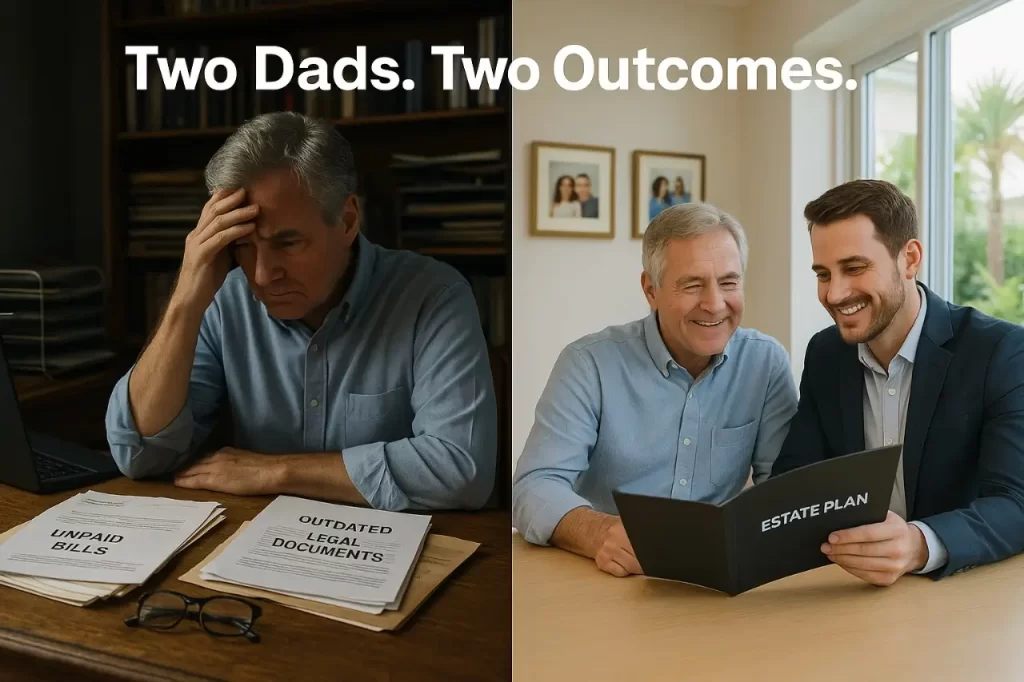
Sometimes a hypothetical story can illustrate the stakes better than dry numbers. Consider two patriarchs, each at the helm of a wealthy family:
The First Father (Mr. Gold) is a 75-year-old patriarch living in a high-tax state – let’s call it Empire State (it won’t surprise you which one). He has spent his life building a business and accumulating a fortune. He has a Daughter and a Son who help run the family office. Mr. Gold loves his home state despite the taxes; his family’s roots are there, and he never seriously considers moving. Sadly, he passes away unexpectedly, leaving an estate valued at $50 million. At his funeral, the longtime family Priest delivers a moving eulogy about Mr. Gold’s generosity and the charitable legacy he hoped to leave. The very next week, the family meets with their Banker and attorneys to settle the estate – and they receive a nasty shock. Empire State’s estate tax kicks in at a low threshold, and Mr. Gold exceeded it by a mile. The state demands millions. In fact, nearly $8 million will be due in state estate taxes alone. The Daughter and Son glance at each other in dismay, realizing that to raise that cash, they’ll have to either liquidate some of the family’s investment portfolio or sell the secondary vacation home that has been in the family for generations. The Banker quietly explains that the tax bill will be due within nine months, and interest will accrue if they don’t pay on time. In that moment, the Priest’s words about charity ring hollow – because the family’s planned charitable endowments must be downsized. A big chunk of what Mr. Gold intended for his alma mater and church will instead go to the government. The Son leaves the meeting with tears of frustration in his eyes, murmuring, “There had to have been a better way.”
The Second Father (Mr. Blue) is a 70-year-old patriarch of a similarly wealthy family, but he approaches things differently. A decade earlier, seeing the direction of taxes and politics in his high-tax state (let’s call it Garden State), he took action. Mr. Blue consulted with his attorneys and made the bold move to establish Florida domicile. He purchased a home in Florida, moved his primary residence there, and gradually transferred much of his wealth into trusts based out of Florida. His Sister thought he was crazy to uproot at age 60, but he had a vision of multigenerational prosperity. Mr. Blue created a Florida dynasty trust for the benefit of his children and future grandchildren, seeding it with a large portion of his assets. Fast forward to today – Mr. Blue also passes away (life has its final chapter for us all). His estate is sizable, around $50 million like our other example. However, because of his planning, the outcome is dramatically different. His Daughter and Son (the beneficiaries of his trust) meet with the family’s Florida attorney (that would be me, perhaps) and their Private Banker. There is no state estate tax due at all – Mr. Blue died a Floridian. The Banker congratulates them on the foresight: “Your father’s move to Florida saved your family about $8 million in state taxes, and his trust will continue to grow that wealth for decades.” In the back of the conference room, the Family’s long-time Accountant breathes a sigh of relief, knowing that the IRS will only assess federal estate tax on amounts above the generous exemption, and Florida’s laws have minimized even that exposure. A Florida Judge in probate court (for the few assets outside the trust) quickly admits Mr. Blue’s Florida will to probate, and the process is smooth and uncontested – largely because most assets were in the trust and don’t even need to go through probate. The Court Clerk notes how everything is in order, and even comments, “I wish all estates were planned this well.” Mr. Blue’s children toast to their Father’s wisdom: he not only preserved more wealth for them, but he spared them the turmoil that families like Mr. Gold’s are facing.
Several weeks later, by coincidence, the Daughter of Mr. Gold and the Daughter of Mr. Blue meet at a philanthropic event (let’s say both families support the arts). They chat about life. The Daughter of Mr. Gold admits she’s been dealing with an exhausting estate mess – probate court hearings, fights with the state tax authority, and the painful sale of their family summer house to pay taxes. “It’s been heartbreaking,” she confides. “Half of Dad’s hard-earned money is tied up or gone. I can’t believe we’re here auctioning his art collection; he wanted it to go to the museum, but we have to sell it to raise cash for the taxes.” The Daughter of Mr. Blue has a very different experience to share. “My dad… he made some hard decisions years ago that I didn’t fully appreciate at the time,” she says. “But now I’m so grateful. Settling his estate has been almost peaceful. No huge tax bills, no court battles. His trust took care of everything exactly as he wanted. We’ve been able to focus on remembering him and continuing his legacy, rather than fighting over money.”
In the corner, listening to these conversations, is a Family Wealth Advisor – perhaps a Banker or Lawyer – who has clients in both situations. He has seen the contrast between Poor Planning and Rich Planning. Shaking his head, he remarks to a colleague, “These stories keep playing out. Families who plan and leverage states like Florida can thrive even after the patriarch is gone. Those who don’t… well, I hate to see a lifetime of work get picked apart by taxes and legal fees.”
This tale of two fathers might be fictional, but versions of it happen every day. The difference in outcomes is stark — and it all comes down to where and how you plan.
Legal Breakdown of California to Florida Estate Planning Strategy
Let’s unpack the example above with some real legal and tax analysis, so you can see how the numbers and laws apply:
For Mr. Gold’s estate in the high-tax “Empire State”:
- State Estate Tax Law: Empire State in our example mirrors a state like New York. New York’s estate tax exemption is around $6.8 million, and the tax rate ranges from ~3% up to 16% on the amount above that exempt threshold. It also has the dreaded cliff – if the estate exceeds 105% of the exemption (roughly $7.14 million), the exemption is lost entirely. Mr. Gold’s $50 million estate is well above that, so essentially the whole $50M is taxable by the state.
- Tax Calculation: The top bracket is 16%, so roughly speaking, New York would take 16% of $50M = $8 million. (The actual calc is graduated, but it hits 16% at the upper end, so it’s in that ballpark). That aligns with the story where $8M was due. This $8M is on top of any federal estate tax. Federally, $50M minus the federal exemption (~$13M in 2023) leaves ~$37M taxable at 40%, so another ~$14.8M to IRS. Combined, the taxes could approach $23 million. But here we’re focusing on the state piece, which is $8M that could have been $0 if Mr. Gold had died a Floridian.
- Inheritance vs Estate Tax: Some states (like New Jersey or Pennsylvania) impose an inheritance tax instead of or in addition to estate tax. In an inheritance tax, the rate depends on who the heir is. In our example, if it were New Jersey: children are exempt from NJ inheritance tax, but if any assets went to, say, a nephew or family friend, those could be taxed up to 15-16%. Maryland would even tax kids via estate tax and more distant heirs via inheritance tax. Either way, Florida has none of these taxes, so Mr. Gold’s decision not to move cost his family dearly.
- Forced Asset Sales and Liquidity: The story of selling a vacation home or art collection is a common one. State (and federal) estate taxes are typically due 9 months from date of death. That’s a short window to come up with millions in cash. Illiquid estates – those composed of real estate, closely-held business interests, art, etc. – often have to liquidate assets at fire-sale prices to raise the cash. I’ve represented estates that had to quickly sell a commercial building because the tax man doesn’t accept “I’ll pay later.” It’s heartbreaking when that building has been in the family for generations. In court, I’ve seen Judges show sympathy but their hands are tied – the law is the law, and taxes must be paid. Proper planning (like life insurance to cover taxes, or better yet, avoiding the tax by changing domicile) can prevent this tragedy.
- Loss of Charitable Intent: Mr. Gold wanted to give to charity, but state taxes took a chunk first. In reality, there’s a double whammy: state estate tax has no charitable deduction separate from federal (except what federal allows). If Mr. Gold left, say, $5M to charity, that portion wouldn’t be taxed federally. But New York’s “cliff” means once over the threshold, it might tax the estate’s entire value regardless of charitable bequests (though effectively charity would reduce the estate size for tax… the cliff complicates it). The point is, money to taxes is money not to charity. Many of my philanthropic clients choose Florida residency precisely so that more of their estate can go to their foundation or alma mater instead of the state coffers.
- Administrative Burden: I mentioned probate court and fighting with tax authorities. In high-tax states, executors often have to file a state estate tax return in addition to the federal one, and it can be audited. New York’s tax department, for example, scrutinizes these filings and will verify domicile if there’s any doubt. I’ve dealt with New York audits where they demanded proof of where the decedent was living in their final years – because if they can catch you as a NY resident, they get that 16%. They are aggressive, as noted earlier. In Mr. Gold’s case, dying clearly as a resident of NY means no fight about domicile, but if he had tried to claim Florida without really moving, his heirs would be in for an audit battle while grieving. This underscores: if you’re going to escape, truly escape (like Mr. Blue did).
Now, for Mr. Blue’s estate as a Florida resident:
- No State Tax: Because Mr. Blue established Florida domicile, his $50M estate is subject only to federal estate tax (no state hit). Florida has no estate tax (it’s actually constitutionally prohibited unless tied to the now-defunct federal credit) and no inheritance tax. The difference is stark: $0 to Florida versus $8M to New York in the prior scenario. That $8M saved can stay invested in the family trust, funding perhaps $320,000/year of income (assuming a 4% return) for the children or grandkids – perpetually. Over 20 years, that $8M could itself grow to significant sums if kept in the family pot.
- Dynasty Trust Advantages: Mr. Blue placed assets in a Florida dynasty trust. What does this do? It means those assets bypass his personal estate when he dies. They aren’t subject to probate and, if set up properly, not subject to estate tax in his estate at all (they were likely gifts made earlier under his lifetime exemption). Plus, Florida law now lets that trust last 1,000 years, and provides strong creditor protection for the beneficiaries. In Mr. Blue’s case, his children can benefit from the trust without owning the assets outright, which keeps those assets protected from any divorces or lawsuits they might face and keeps the assets out of the children’s own estates too. This is how you create dynastic wealth. The trust might include provisions to fund education, start businesses, buy homes for descendants – all without collapse. Many high-tax states either didn’t allow long-term trusts or the families simply never learned about them. Florida attracts top estate planning talent, so techniques like these are more common and better refined here.
- Probate and Legal Simplicity: Mr. Blue had a Florida will for any remaining personal assets, but most assets were in the trust or had beneficiary designations. Florida’s probate process for a domiciliary is relatively straightforward, especially when the heavy lifting is done by the trust. The story mentions a Judge and Court Clerk appreciating the smooth estate – that’s drawn from my experience where a well-planned estate sails through probate in a matter of a few months with minimal fuss. Compare that to a messy estate with tax apportionment issues, disgruntled heirs feeling the pinch of taxes, etc. In New York or California, I’ve seen probates drag on for years, partially due to the estate tax needing to be resolved. In Florida, we can often wrap up an estate faster since we’re not waiting on a state tax clearance.
- Family Harmony: Notice the difference in the families’ emotional state. Mr. Gold’s family is stressed, perhaps even quarreling (“Who messed up by not planning for this? Do we have to sell the house? Is this the executor’s fault?” – these fights happen). Mr. Blue’s family is sad at their loss but not financially stressed. They aren’t forced into difficult decisions or blame games. As an estate litigator, I can attest that big tax bills often trigger disputes among siblings. Someone might accuse another of influencing Dad not to move, or of poor handling of money, etc. Removing that stress (as Mr. Blue did by planning) keeps the family together. No one is pitted against another, and there’s more pie to go around. This priceless benefit – family unity – is often overlooked in dollar analyses but is very real.
In summary, the breakdown shows that the law absolutely favors those who plan ahead and choose favorable jurisdictions. Changing domicile to Florida can be the single most effective strategy to avoid state death taxes. For someone with a $50M estate, it’s an $8M (or more) decision. For someone with a $100M estate, it could be a $16M+ decision. And even during life, moving can save six or seven figures every single year in income taxes. Over a decade or two, that can exceed the estate tax savings!
It’s not hyperbole to say that failing to plan – or staying in a high-tax state out of inertia – can shatter a legacy. I’ve personally seen a fortune that took a lifetime to build be sliced in half by combined taxes and forced asset sales, leaving far less for the next generation. I’ve also seen fortunes preserved nearly intact because the family made the right moves. This breakdown between Mr. Gold and Mr. Blue’s outcomes is exactly the difference between Poor Planning and Rich Planning that I opened this article with. It’s night and day.
My Experience with California to Florida Estate Planning Cases
Allow me to step back and share a bit about my own experience as an estate planning and probate attorney. I’ve been practicing law for many years (our firm has been open since 2016), and in that time I’ve guided countless families through both the stormy seas of probate litigation and the smooth sailing of proactive planning. These experiences have taught me lessons that no textbook ever could.
One thing I’ve learned is that wealth alone is not enough to guarantee a peaceful transfer of that wealth. I’ve seen multimillionaires who failed to plan – their families ended up feuding in court, wealth leaking to taxes and attorneys, the exact opposite of what the patriarch/matriarch wanted. On the other hand, I’ve worked with very affluent families who did everything right: they planned, they communicated, they took advice. Those families often remain strong and prosperous long after the original wealth creator is gone. I’ve lived these contrasts, and it’s why I’m so passionate about what I do.
I also bring a personal perspective to my practice. As I shared in the Rich Planning vs Poor Planning story, my own family went through a devastating probate due to poor planning. That experience imprinted on me a deep understanding of the emotional toll these issues take. When I say I want the best for my clients, it’s not a platitude – I truly know what’s at stake, on a human level. I often think: if only my grandfather had the kind of advice and planning that I now provide to others, how different things could have been for my family. That thought drives me every day to be the advisor that my family didn’t have.
In terms of expertise, I strive to stay at the cutting edge of estate law and tax strategy. Tax laws change, family situations change, and new tools emerge. I pride myself on precise knowledge – whether it’s the latest Florida statute or the current federal estate exemption (yes, I have it memorized: $12.92 million in 2023, going down in 2026!). But beyond expertise, I believe in wisdom – the ability to apply knowledge to achieve the best outcome for real people. Wisdom comes from experience. Having navigated both routine and extremely complex cases, I’ve gained a feel for what works and what pitfalls to avoid.
For example, I’ve developed a step-by-step process for changing domicile that covers legal, tax, and practical aspects, honed from helping many clients make that transition. I’ve learned how to present clear evidence to tax authorities to defend a client’s new residency, often preventing a costly audit from even starting. I’ve litigated probate cases where sibling rivals threw everything at each other – through that, I learned how to draft ironclad estate plans that anticipate and prevent those fights. (It’s more pleasant to draft a strong no-contest clause in a trust now than to deal with a bitter will contest later, believe me!).
My experience also extends to understanding the unique needs of family offices and ultra-high-net-worth individuals. These clients require not just legal advice but often a quarterback to coordinate with their accountants, financial advisors, and sometimes multiple generations of family members. I’ve stepped into that role readily. Since founding my firm in 2016, I’ve been fortunate to earn the trust of many prominent families. They know that I get the big picture: preserving not just money, but values and relationships. This holistic perspective is something I’ve cultivated over years of working closely with clients, learning about their businesses, their dreams for their children and grandchildren, and even their fears.
In short, my experience has made me a well-rounded advocate. I’ve seen the worst-case scenarios (which I fight to fix in court) and the best-case scenarios (which I strive to implement in planning). I draw on both to guide my clients. When you work with me, you’re not getting someone who is just pushing papers – you’re getting a partner who has walked the path many times and will personally ensure that your journey is a successful one. Our firm may not be the oldest or largest, but since 2016 we’ve built a reputation for excellence and compassion. We combine the energy of up-to-date strategies with the wisdom of hard-earned experience. That, I believe, is our special sauce.
Author’s Note on California to Florida Planning
Writing this article has been more than just an academic exercise for me – it’s personal. I’m Attorney J. O. Valentino, and I want to speak to you now not just as a lawyer, but as someone who deeply cares about families and legacies.
Every day, I meet clients who have worked a lifetime to build something meaningful – a business, a nest egg, a way to provide for their loved ones. I see the pride in their eyes, but also the worry. “Will my family be okay when I’m gone? Will what I’ve built be protected?” These worries keep them up at night. I know, because I’ve had those same late-night thoughts about my own family’s future. I understand you on a human level. It’s not just about laws and taxes; it’s about love, duty, and peace of mind.
I want you to know that when I take on a client, I’m all in. Your goals become my goals. I celebrate your victories (like successfully making that Florida move, or signing a trust that secures your grandkids’ futures), and I shoulder the burdens of the challenges we face (like navigating a tricky probate or fending off a relentless tax auditor). I’ve laughed with clients in times of joy – for instance, when a client told me he paid zero state tax for the first time after moving to Florida, we literally high-fived! And I’ve shed tears with clients in times of grief – I’ve sat at kitchen tables comforting families as they grapple with loss and legal aftermath. These moments fuel my commitment.
I’ll let you in on a secret: this isn’t just a job for me; it’s a calling. I became an attorney because I believe in the power of “Rich Planning” to change lives. I’ve seen families torn apart by poor planning (I wouldn’t wish what happened to my family on anyone). On the flip side, I’ve seen the relief and gratitude on a widow’s face when I tell her, “Your husband planned well – you and the kids are going to be taken care of, and no court will take that away.” Those are the moments I live for. They’re why I sometimes catch myself smiling on the drive home from work – because I know I made a difference for someone that day.
Emotionally, I invest in my clients. I celebrate when they welcome a new child or grandchild (and promptly adjust their estate plan to include the new blessing!). I empathize when they face tough decisions, like moving out of a state they’ve lived in for 50 years – I know that’s not easy, and I strive to make the transition as smooth as possible, even exciting. I’ve literally flown out to a client’s old home up north to help coordinate the move and ensure nothing falls through the cracks, because that’s what it took. I’m not saying every case needs that, but I treat every case as if it were my own family. Because in my mind, once you’re my client, you kind of are.
Trust is something I cherish. Clients entrust me with their deepest secrets and biggest fears. In return, I give them honesty, competence, and unwavering loyalty. If a strategy isn’t right for you, I’ll tell you – even if it’s unpopular. If a law change is on the horizon that could affect you, I’ll be the one sounding the alarm early so we can adapt. My promise is that I will always act in your best interest, with the utmost integrity. Your legacy is my mission.
I’m grateful that you took the time to read this article. It tells me you care about your family’s future and you’re seeking knowledge – that already makes you one of the “Rich Planners” in my book, because you’re being proactive. Whether you’re navigating an ongoing probate nightmare or you’re wisely planning to avoid one, I want you to feel that you’re not alone. I’m here to help, armed with expertise and fueled by a genuine passion to see families thrive.
In closing, let me say this: I love helping people in this field because I believe every family deserves a chance to create a positive legacy, not just the ultra-wealthy. Yes, this article focused on a very wealthy person and big tax states, but the principles apply even if your estate is modest. It’s about protecting what matters to you. If you decide to reach out to me, you’ll find a compassionate ear, a sharp legal mind, and a heart that truly wants to lift the burden off your shoulders. That’s my commitment – as a lawyer and as a fellow human being who cares.
This article is for informational purposes only and does not create an attorney-client relationship. The only way to create an attorney-client relationship with me is to sign a written agreement with my firm confirming that I have agreed to represent you. Please consult an attorney for personalized advice.
Books Worth Reading
I believe in empowering my clients with knowledge. That’s why I’ve written several in-depth guides on Florida estate planning and related topics. Feel free to download these free resources for more insights:
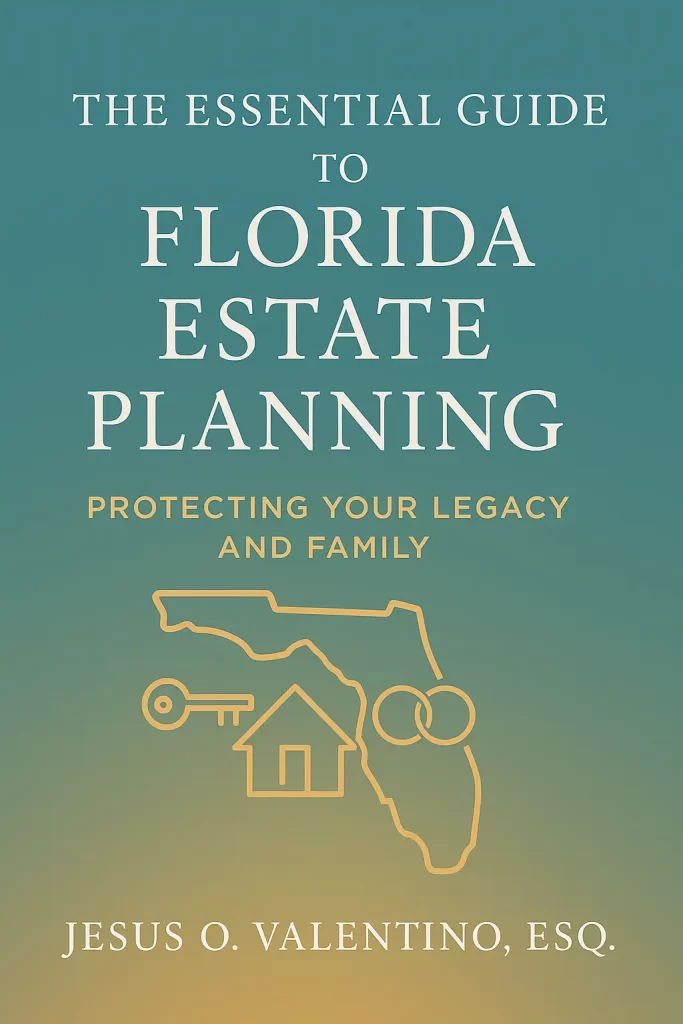
- The Essential Guide to Florida Estate Planning: Protecting Your Legacy and Family – A comprehensive overview of Florida-specific estate planning tools and how to use them effectively.
- Star-Spangled Planner: Protect Your Family and the Second Amendment with Estate Planning – An insightful guide for gun owners and collectors on passing down firearms lawfully and safely through estate planning.

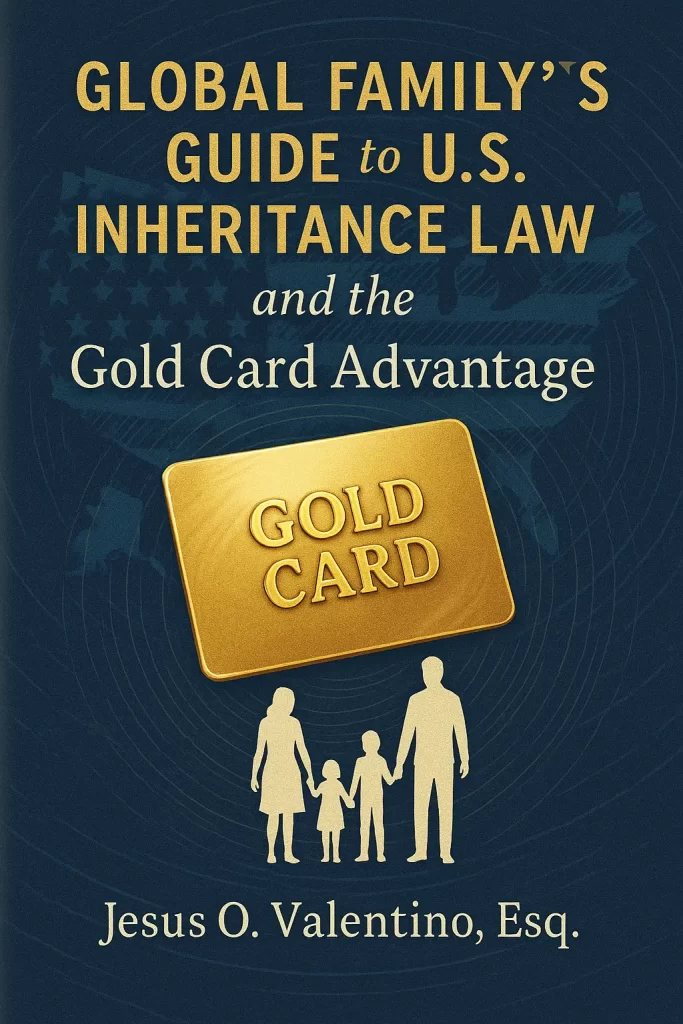
- Global Family’s Guide to U.S. Inheritance Law and the Gold Card Advantage – Advice for international families with U.S. assets or members, covering cross-border inheritance issues and opportunities (like the “Gold Card” investor visa benefits).
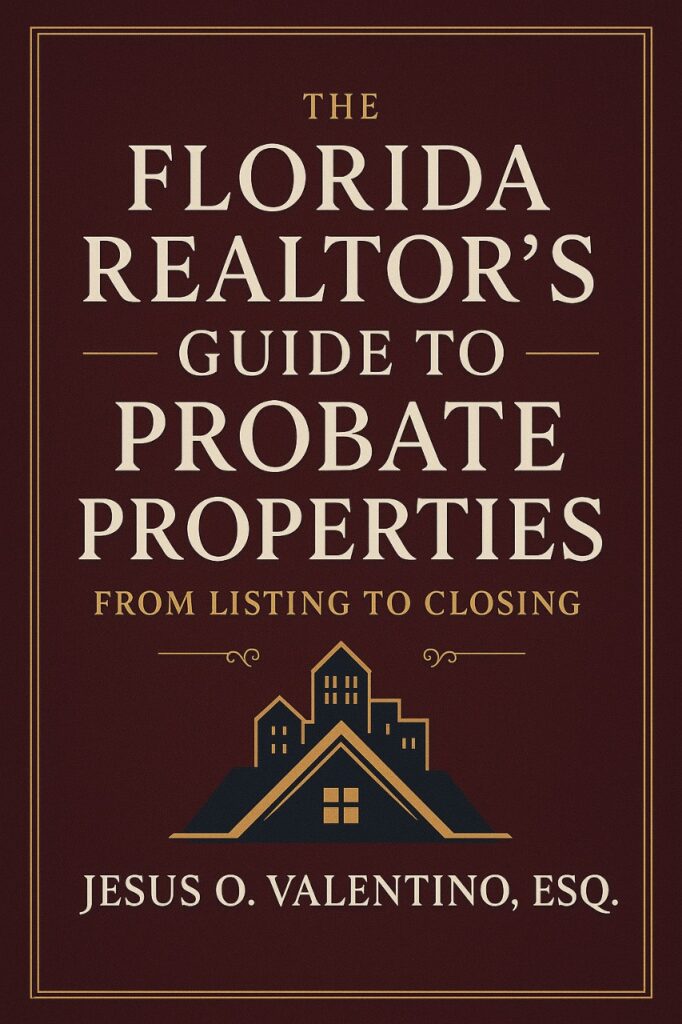
- The Florida Realtor’s Guide to Probate Properties: From Listing to Closing – A useful read for real estate professionals and property owners dealing with houses in an estate. It explains the probate process in Florida and how to efficiently sell or transfer real property that’s tied up in an estate.
Each of these books is packed with practical tips, real-world examples, and Florida law references. I wrote them to be accessible but authoritative, drawing on both my legal expertise and my personal passion for protecting families. I encourage you to explore whichever topics resonate with your situation.
Fun Learning with Celebrity News Videos
For a lighter take on estate planning and probate, check out my Celebrity Estate News shorts and videos. I break down high-profile celebrity estate dramas and wealth moves in an educational (and entertaining) way:
- Facebook: JOValentino – Follow my page for regular videos and insights.
- YouTube Shorts: @JOValentino – Quick-hit videos on lessons from celebrity estates and financial news.
- Instagram: @valentinojov – Estate planning tips and behind-the-scenes snippets of my professional life.
- Twitter (X): @JesusOValentino – Join the conversation and get updates on law changes, plus my commentary on current events related to taxes and estates.
These platforms are a fun way to stay informed and engage with me. I often cover stories (like why a superstar’s family ended up in a nasty probate fight, or how a billionaire’s move to Florida shook things up) and then explain how those lessons might apply to you. It’s education meets entertainment – I call it “edutainment” – and it reinforces the concepts we’ve discussed in this article.
You have three ways to get in touch with me:
- Call me: (305) 634-7790
- Email me: JO@JOValentino.com
- Online: Fill out the contact form at www.JOValentino.com/contact
Whether you’re ready to make a plan, need a second opinion on an existing plan, or find yourself in a tough probate situation, I’m here to help. Reach out through whichever method is most convenient for you. I look forward to the possibility of working together to protect what you treasure most.
Let’s turn Poor Planning into Rich Planning for you and your family’s future. Here’s to the peace of mind you deserve!
Disclaimer
This article is for informational purposes only and does not constitute legal advice or create an attorney-client relationship. Reading this or contacting me does not mean I am your lawyer – the only way to establish an attorney-client relationship with me is through a signed agreement explicitly accepting you as a client. Every family’s situation is unique, and tax laws change over time. I strongly encourage you to consult directly with a qualified attorney (I’d be honored to be that attorney) about your specific circumstances before making any legal or financial decisions based on the information above.
FAQ
Q1: What is California to Florida estate planning?
A strategy to change domicile from California to Florida to avoid state income and estate taxes.
Q2: How much can you save by relocating?
High‑income earners may save 13% on income and capital gains annually. Future estate tax savings can be in the tens of millions—especially for estates above federal exemption.
Q3: What steps establish legal Florida domicile?
File a Declaration of Domicile, get FL driver license, change mailing/banking and sever California ties, and spend 183+ days in Florida.
Q4: Is Grant Cardone’s move a good example for others?
Yes. His public comments confirm tax was the main motive. He estimates California lost $1 billion in taxes over his lifetime.
Q5: Do I still owe estate tax if I keep assets in California?
Possibly. Florida residency mainly protects intangible assets. Real estate or businesses in California may still be subject to California estate tax proportional to location.


Share: